
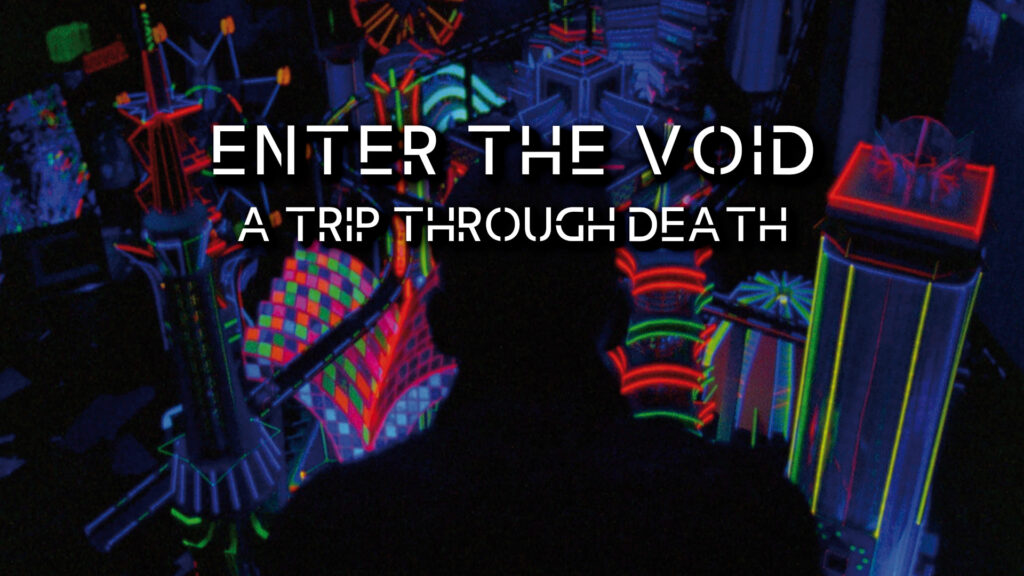
Right from the outset, Enter the Void (2009) is a film that transports you into a world where things aren’t quite right.
Credits appear at the beginning, flashing and flickering, too fast for us to absorb what we are reading. An eerie, disjointed score sits behind a shuddering, mechanical sound that will stay with you long after the film’s conclusion.
After an abrupt break, a bouncy electronic song is brought in as we deal with the confusion of whether or not we’ve accidentally started the film at its end. Things then continue to build in intensity as the writer/director’s name appears, followed by the cast. Everything then returns to a disjointed state with colours combining, lines folding in on themselves, shapes becoming blurry, until the man responsible for this movie (experience) appears on the screen. One more abrupt cut later, and a word is brought back.
ENTER
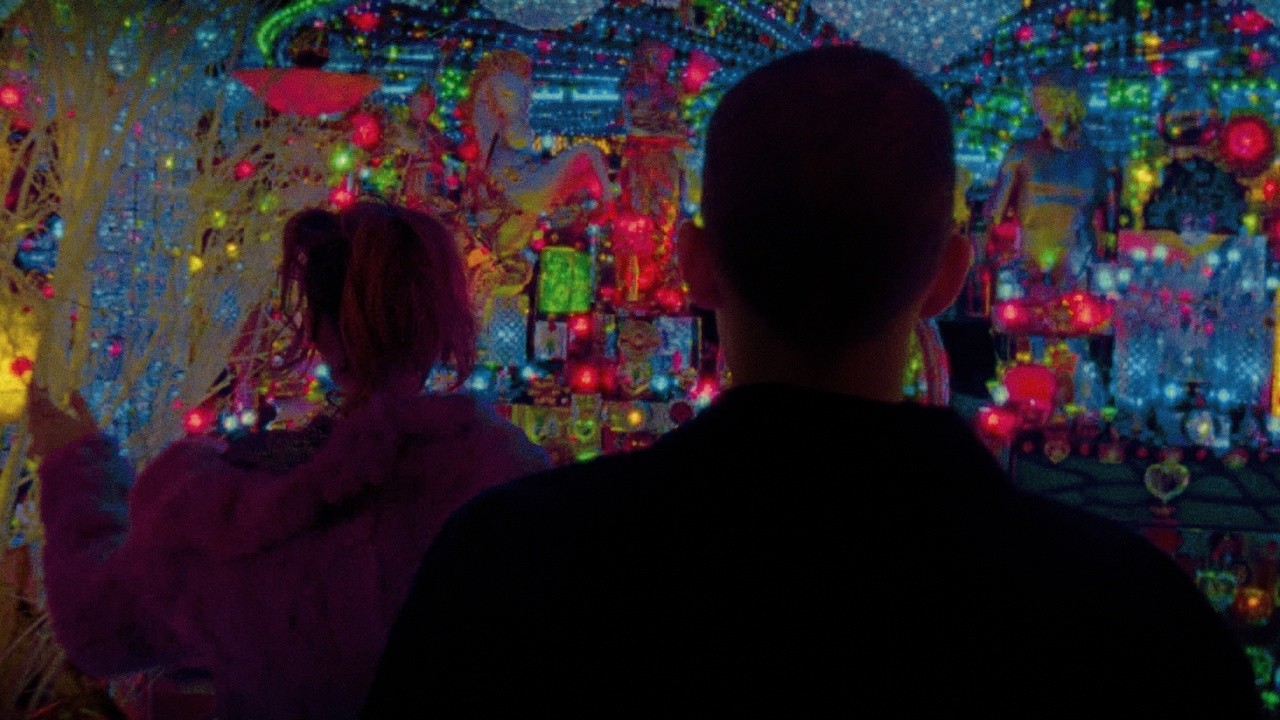
It’s clear from the get-go, Gaspar Noe is set on transporting us visually, auditorily, and mentally for the next 2.5+ hours. He’s preparing us for the journey, the trip, we’re about to take. And once we’re introduced to Paz de la Huerta’s character, Linda, we learn two themes that will linger for the rest of the movie: death and falling into the void. Following her into the apartment of this opening scene, we then gain another insight into another core theme with the appearance of a copy of The Tibetan Book of the Dead.
Originally titled The Bardo Thodol, this text is ancient, hearkening from the eighth century. Dealing with many topics and themes, the central thesis is apparent from the opening page: What happens when we die?
While death is something we can all pretty much guarantee will happen at one stage or another, many of us find the topic difficult to talk about, think about, even accept it being true.
It’s not a surprise, really. Death, since the dawn of consciousness, has been part of the mystery of reality: Where do we go when we die? Can we even die? If so, what is on the other side?
Of course, the fear of death is a normal emotion. The greed of experiencing and attaining more before perishing is too. But us “modern” day folks aren’t always coherent or aware of what it is we actually believe or think.
Death in the Past
For the ancient Egyptians, death was a transition into the next phase of existence. We can see that quite clearly with the mummification methods, including the grandiose tombs and offerings. For the ancient Greeks, death plunged individuals into the underworld. For the religious of today, however, death is a means of getting you into Heaven or Hell. For the atheists, death is when we return to dirt, to dust, to the very fragments of the universe. For the main character (Oscar, played by Nathaniel Brown) of this film, just as The Bardo Thodol states, death is merely the beginning, a beginning that leads to an individual reincarnating over and over again until they accept reality for what it is and overcome it.
In other words, when they reach enlightenment.
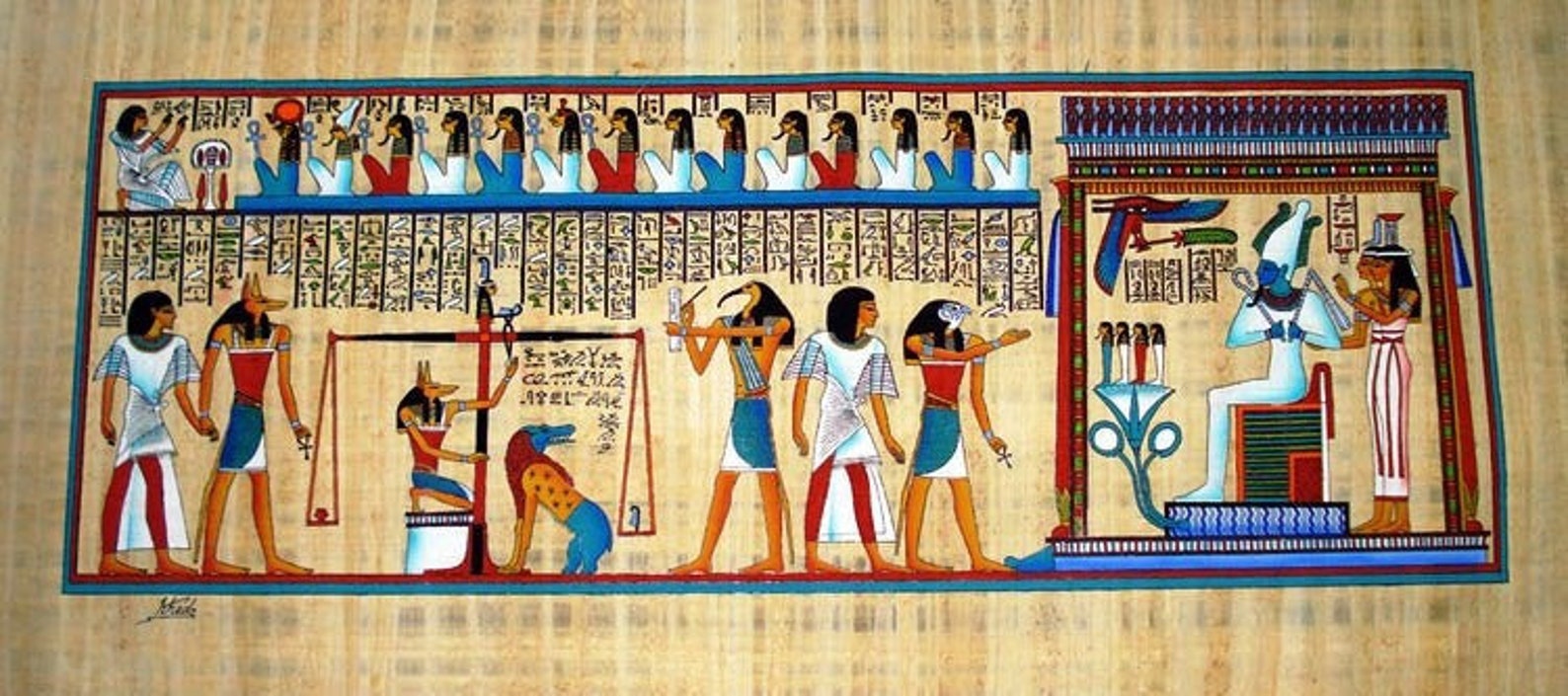
As we watch the film, we follow this journey, attaining an insight and an almost eerie premonition into what may be awaiting us one day down the line. Of course, you may baulk and roll your eyes at the potential for such a future. Yes, it is true that many of us in Western society often see the concept of the afterlife or the cyclic nature of reincarnation as mere fiction. But such judgment is undoubtedly what Carl Jung said to be a consequence of our rational philosophical nature. In other words, our belief that we know better than our ancestors, that we do not need to think of what they thought about. Or why.
Sure, death, the afterlife, the psyche, karma, the concepts of judgment and what may await us on “the other side” are complicated, somewhat superfluous, concepts and topics to many, but that is where The Bardo Thodol steps in, serving as a guide to prepare the living for the beyond.
‘But this beyond is not a world beyond death, but instead an alteration of outlook, a psychological beyond, a redemption, an awakening, a transcendence over everything, a separation, an initiation process.’ – Carl Jung (paraphrased).
While yes, this film comes with some heavy themes and plenty of creative cinematic choices, it is not meant to thrust you into an existential crisis you will never climb out of. Rather, it is one that has the potential to awaken some questions within, questions that may result in you questioning the very nature of yourself and creation.